The short version: most Sarasota cages do best with standard 18/14 fiberglass on the bulk of the enclosure, no-see-um mesh on the sides you sit near if you're close to the water, and a tougher pet-resistant screen on the doors and low panels that take the beating. Almost nobody needs one single screen everywhere, and honestly, if a company is quoting you the priciest mesh for the whole cage, they're padding the job. A good rescreen mixes screens on purpose.
Here's what each one actually does and where it earns its keep.
The four screens you're choosing between
There are really only four options worth talking about for a Gulf Coast pool cage. Whatever a screen company quotes, it falls into one of these.
| Screen | What it's for | Relative cost |
|---|---|---|
| Standard 18/14 fiberglass | Everyday bug and debris protection with good airflow | Lowest |
| No-see-um | Stops the tiny biting midges near the water | A bit more |
| Pet-resistant | Survives dogs, claws, and door traffic | More per foot |
| Florida Glass | Solid lower panels for privacy and splash | Highest, used in patches |
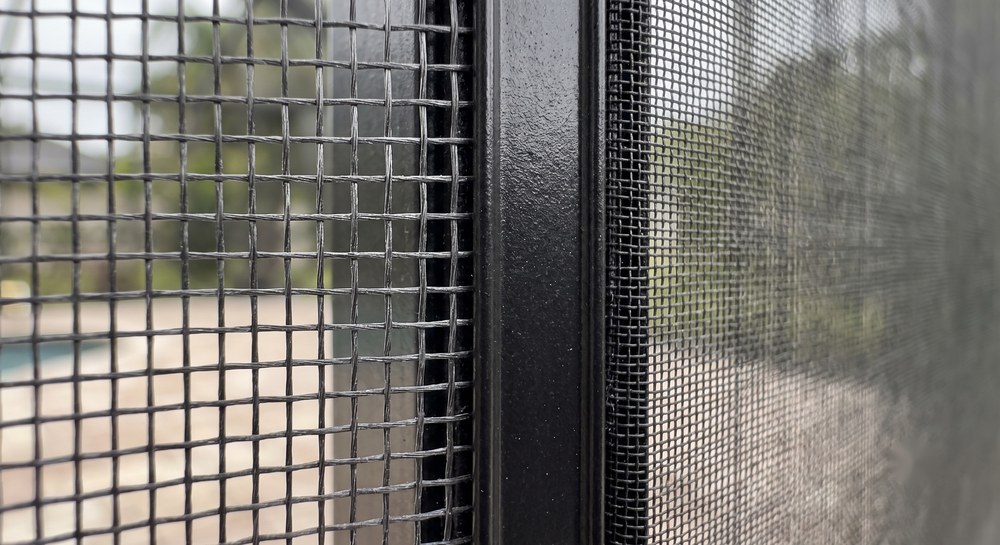
Standard 18/14 fiberglass: right for most of the cage
Standard fiberglass is the best pick for the majority of the cage on the majority of Sarasota homes. The "18/14" is just the weave count, and it lands in the sweet spot: fine enough to stop mosquitoes, wasps, and the usual leaf litter, open enough to let the breeze move through so the lanai doesn't feel like an oven in July. It's also the cheapest to buy and to replace, which matters a lot when you're screening a whole enclosure.
Its one weakness is the very small stuff. Down by the bay and the canals the no-see-ums come out around dusk, and they walk straight through a standard weave like it isn't there. If that's your evening, keep reading.
No-see-um: for the bugs standard mesh lets through
No-see-um mesh earns its price when the tiny biting insects are getting into your cage and standard screen isn't stopping them. Same fiberglass idea, tighter weave, openings too small for the midges. The homeowners who ask for it most are the ones near the water in Siesta Key, Bird Key, and the canals off Phillippi Creek, because that's where the no-see-ums are worst and a normal screen just doesn't cut it.
There's a real trade-off, so I'll be straight about it. A tighter weave breathes a little less, so a fully no-see-um cage feels slightly less airy, and it costs a bit more per panel. That's exactly why most people don't do the whole cage in it. Screen the sides you actually sit near, leave the high roof panels standard, and you get the bug protection where it counts without paying for it everywhere.
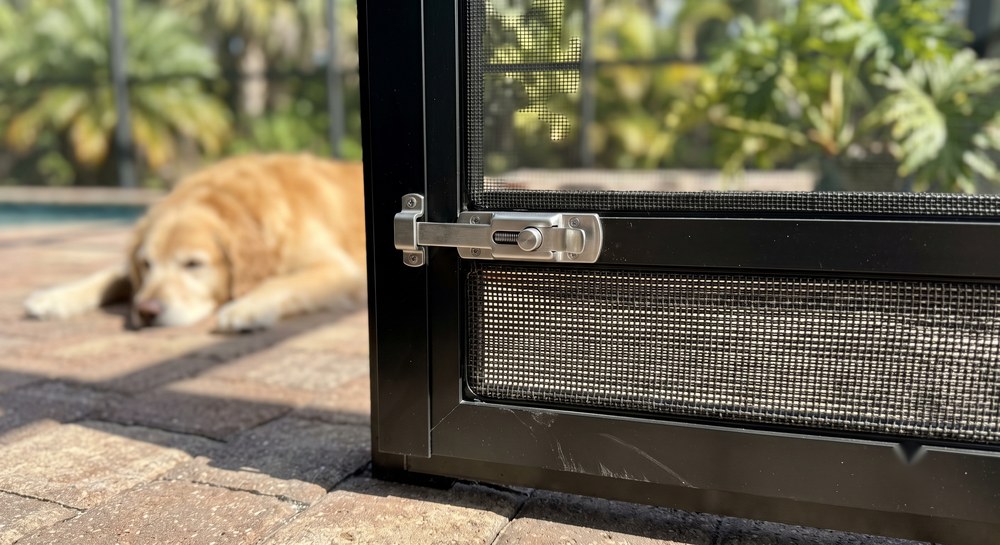
Pet-resistant: put it where the damage happens
Pet-resistant screen belongs on the panels your dog can reach, not on the whole cage. It's a heavier, tightly woven mesh, closer to a light vinyl-coated polyester than thin fiberglass, and it takes claws and a leaning Labrador without tearing or popping the spline. If you've patched the same low corner twice already, this is the end of that cycle.
The move that saves you money is simple. Run pet screen on the door and the bottom kick panels, keep standard or no-see-um up top where nothing is clawing at it, and you've spent the extra money exactly where the wear is instead of on panels ten feet in the air. Kids and heavy door traffic are the same story as the dog.
Florida Glass: a different job entirely
Florida Glass isn't a bug screen at all. It's a solid vinyl-backed panel used along the lower sections of a cage for privacy or to block splash and wind. If your cage sits close to a neighbor's yard or a sidewalk, a few Florida Glass panels down low give you some cover without walling the whole thing in. It costs more than mesh and it doesn't breathe, so it goes in patches, never across the entire enclosure.
So which should you actually pick?
Match the screen to how you live in the space. If you've got a normal yard, normal bugs, and a budget, standard 18/14 fiberglass across the cage is the answer and you can stop overthinking it. If you're near the water and the little ones bite at dusk, put no-see-um on the sides you sit by and leave the roof standard. If a dog or heavy door traffic is chewing through panels, pet-resistant on the door and low sections fixes it. And if a neighbor or the street looks right into your lanai, a few Florida Glass privacy panels down low handle that. Most of the rescreens we do around Sarasota end up being a mix of two of these, and that mix is almost always cheaper than defaulting every panel to the fanciest screen.
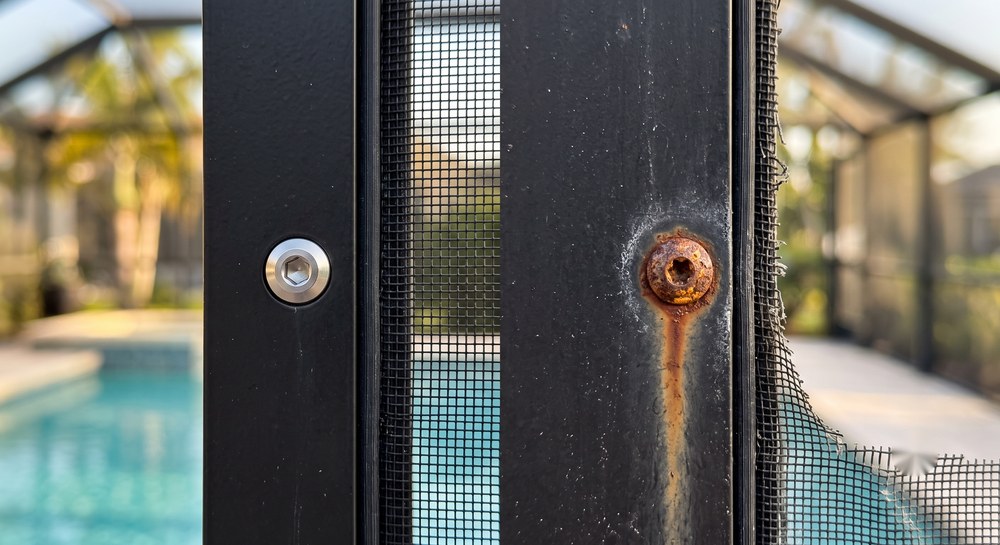
The screen is only half of it
Salt air eats cheap screws, and a rescreen held in with the wrong fasteners will streak your frame with rust and loosen up inside a couple of seasons. That's the part people forget when they're comparing mesh. We set new screen with corrosion-resistant fasteners and fresh spline on every job so it stays tight, and it matters more the closer you are to the water. If your current cage already has rust bleeding down from the screws, that's worth handling at the same time, because left alone it turns into bigger frame repairs down the road.
How long will the new screen last?
Standard fiberglass usually gets you about 7 to 15 years in Florida before it's brittle enough to replace. Sun does most of the aging, salt speeds it up, and one bad storm can undo all of it at once. Pet-resistant screen tends to outlast the rest in the high-wear spots. When your screen starts to sag, crackle when you press on it, or show daylight at the seams, it's near the end, and that's the moment to plan a full pool cage rescreen instead of chasing one torn panel at a time. For what shortens or stretches that timeline, see our guide on how long pool cage screen lasts.
What does a rescreen cost?
Screen choice is one of the biggest levers on the price. Fiberglass is the most affordable, no-see-um and pet screen run a bit more per square foot, and specialty panels cost more again. A single torn panel is usually a small flat rate, and a full-cage rescreen for a typical single-story Sarasota home lands in the low thousands depending on size and which screens you pick. We break the numbers down on our Sarasota pool cage cost guide, and you always get a written price before any work starts.
What homeowners ask next
Can you mix two screen types on one cage? Yes, and it's what we usually recommend. A common setup is no-see-um or standard on the main panels with pet-resistant on the door and low kick sections, so each area gets the screen it needs. See the rescreening service for how we handle it.
Do you have to rescreen the whole cage at once? No. If only a few panels are shot we'll spot-rescreen and match them to the rest. But if the screen is 10 to 15 years old and failing all over, doing the whole cage usually costs less per panel than replacing them a few at a time for years.
What screen is best right on the water? Near the keys and canals, the corrosion-resistant hardware matters as much as the mesh. We spec fasteners and spline that hold up to salt air, and often pair no-see-um panels with those for the bugs. Get a look at the cost guide for what that runs.
Get a screen recommendation, free
The fastest way to get this right is to have us look at the cage. We'll tell you which screen fits which panels, what it'll cost, and what we'd honestly skip. No pressure, no upsell to mesh you don't need. Call (941) 541-6567 or use the form above and we'll get right back to you. We're licensed and insured, and we rescreen cages all over Sarasota, Bradenton, Venice, Siesta Key, and Lakewood Ranch.
What is the best pool cage screen for Florida?
For most homes, standard 18/14 fiberglass is the best all-around screen. It's affordable, breathes well, and stops normal bugs. Add no-see-um where the tiny biting insects get in, and pet-resistant on the doors and low panels that take the most wear.
What's the difference between standard and no-see-um screen?
No-see-um has a tighter weave, so it blocks the tiny midges you get near the water at dusk. It costs a little more and lets slightly less breeze through. Standard screen is cheaper and breezier, but the smallest bugs can get past it.
Is pet-resistant screen worth it?
If a dog leans on or scratches your screen, yes. It's a tougher mesh that handles claws and foot traffic. You don't need it everywhere though, just on the door and low panels where the damage actually happens.
How long does pool cage screen last in Florida?
Standard fiberglass usually lasts about 7 to 15 years here. Sun, salt air, and storms shorten it, and the panels by the doors and kick areas wear out first.