The short version: No pool cage is truly hurricane proof, but a modern one is engineered to a real wind rating. Most Florida cages are built to handle roughly 130 to 150 mph, depending on your local wind zone. The screen is porous, so wind passes through to protect the aluminum frame. What usually fails first is old, brittle screen and rusted fasteners, not the code.
Every June the question comes up again around here: can my pool cage take a hurricane? The honest answer depends less on some magic screen than on the frame, the anchors, and the age of it all. Here's what a wind rating actually means on a cage, and where these things really break.
No cage is hurricane proof, but it does have a wind rating
Anyone selling you a "hurricane proof" pool cage is overselling. No screen enclosure is a safe room. A direct hit from a major storm, or flying debris, can end any of them. What a good cage does have is a wind rating. It's an engineered structure, permitted and built to hold a set wind speed for your area. Most Florida cages are designed to take somewhere in the 130 to 150 mph range, and the number depends on your wind zone. Coastal Sarasota, Siesta Key, and the barrier islands sit in a higher-wind zone than inland Lakewood Ranch. Cages near the water are built to tougher figures.
What a wind rating means on a pool cage
A pool cage isn't a screen porch you nail together. In Florida it's engineered structure. A new cage or a major rebuild gets stamped engineered plans, a permit, and an inspection. Those plans are calculated to the wind load the code sets for your exact address. That's the real "rating." The rules live in the Florida Building Code. They factor in your wind zone, how exposed your lot is, and the size and shape of the cage. If you want the plain-English version of terms like wind load and wind zone, our pool cage glossary spells them out. The thing to know: the rating is set when the cage is engineered. An older cage permitted to an older code may not meet what a new one has to.
| Where the cage sits | Typical design wind speed | What that means in practice |
|---|---|---|
| Coastal Sarasota, Siesta Key, Lido Key, the barrier islands | Upper end of the 130 to 150 mph range | Higher wind zone, so the engineered plans call for a stronger frame and more anchoring |
| Inland Sarasota County, Lakewood Ranch, Palmer Ranch | Lower end of the 130 to 150 mph range | Still engineered and permitted, just to a lower design wind speed than the coast |
| Any cage permitted under an older version of the code | Whatever the code required when it was built | An older cage can be perfectly legal and still not meet what a new one has to meet today |
Design wind speeds are set by the Florida Building Code for your exact address, so treat this as orientation and check the permit or the engineered plans for your own cage.
Why the screen is built to let wind through
People are surprised the screen isn't meant to stop the wind. It's the opposite. Pool screen is porous on purpose, so wind passes straight through instead of pushing on the enclosure like a solid wall. A solid roof would catch enormous force. Screen bleeds most of that off, which is a big part of how the frame survives. There's a catch, though. Denser mesh like no-see-um or solar screen catches more wind than standard 18/14. So it puts a little more load on the frame in a storm. And brittle, sun-aged screen is the first thing to go. It tears, then a flapping panel yanks on the frame far harder than tight screen ever would. This is exactly why keeping your screen sound with timely pool cage rescreening in Sarasota FL is part of storm readiness, not just looks.
Should you take the screens off before a storm?
This one gets argued every hurricane season. Pulling screen panels off lets even more wind blow through and can cut the stress on the aluminum frame a lot. The building code actually allows for removing screen in high winds. On an older or marginal cage, the screen is likely to blow out anyway. Clearing the worst panels can be the difference between saving the frame and losing the whole thing. On a newer cage engineered to keep its screen, it's usually not worth the trouble. Here's the honest line. If your cage is young and tight, leave it. If it's old and the screen is shot, taking out the weakest panels ahead of a big storm can help. Never cut into the frame or fasteners yourself, and factor in that you'll need a rescreen afterward either way.
What actually makes a cage more wind-resistant
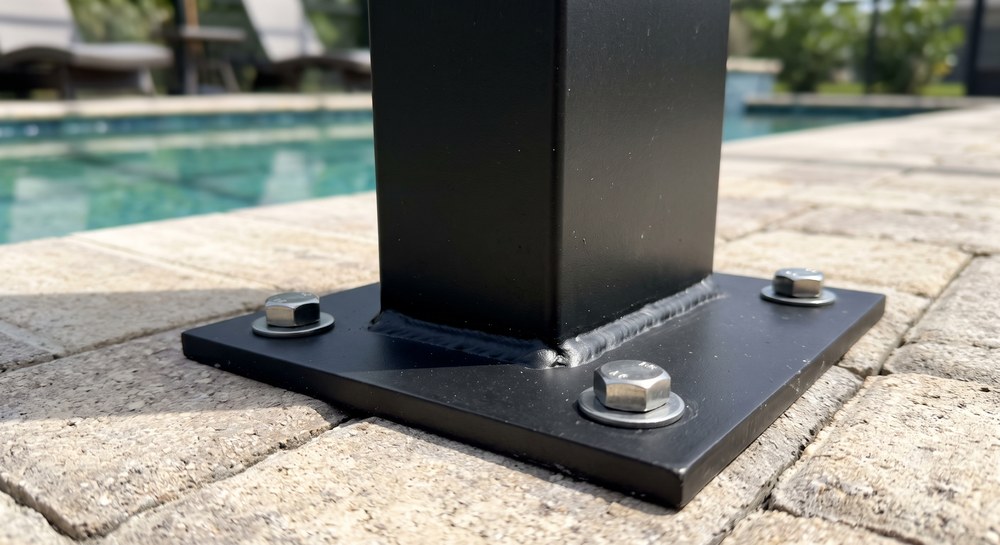
If you want a cage that stands up to weather, spend on the bones, not the mesh. What matters is the frame and how it's held down. Heavier aluminum beams flex less. More anchors, and better ones, into the deck and the house keep it from lifting. Marine-grade stainless fasteners are big here on the coast. Standard screws corrode in the salt air, and a rusted fastener is a weak point waiting for the next gust. And it all has to be engineered and permitted to your wind zone. Screen quality helps at the margins, but if a company is selling you premium mesh as your hurricane protection, they've got it backwards. The fight is the frame and the fasteners.
What a storm does, and repair versus rebuild after
After a storm we see the full range. Sometimes it's a few torn or blown-out panels on a frame that's otherwise fine, which is a straightforward rescreen. Sometimes the frame is bent, the anchors have pulled, or a beam is buckled, and that is a pool cage rebuild Sarasota FL job rather than a patch. A rebuild has an upside worth knowing: it brings the cage up to the current wind-load code, so you come out of it stronger than you went in. If a storm hit yours, our storm and hurricane damage repair is where to start. We'll tell you honestly which side of that line you're on, with a free written estimate you can also hand to your insurer.
Keeping your cage storm-ready
You can't control the wind, but you can control the two things that fail first. Keep the screen sound, because brittle screen tears and a loose panel beats up the frame. And keep the fasteners solid, because corroded screws near the water let go under load. Replacing rusted fasteners and rescreening a sun-shot cage before storm season is cheap next to a rebuild. It's most of what "storm-ready" actually means for an existing cage. For the rest of it, the deck, the pool, and what to do in the last 72 hours, see our guide on how to prepare your pool cage for a hurricane. Not sure where yours stands? We'll come out and look it over. Call (941) 541-6567 or use the form above for a free on-site check.
What homeowners ask next
What does a hurricane-ready cage or rebuild cost?
A full rebuild to current code typically runs from about $8,000 into the $20,000s depending on size and style, while keeping an existing cage storm-ready (rescreen plus replacing rusted fasteners) is far less. Our Sarasota cost guide breaks down every job.
How do I know if my cage meets current code?
It comes down to when it was permitted. A cage built years ago was engineered to the code in force then, which may be below today's wind-load numbers. There's no upgrade sticker; the way a cage reaches current code is a rebuild or major structural work that gets re-permitted and inspected.
Is a screen enclosure the same as a hurricane shutter?
No. A cage keeps bugs and debris out and is wind-rated to survive, but it is not an impact barrier for your house. Windows and doors still need their own protection. The cage protecting the pool and the shutters protecting the home are two separate jobs.
Common questions about pool cage wind ratings
Are pool cages hurricane proof?
No pool cage is truly hurricane proof. A modern one built to current Florida code is wind-rated, usually 130 to 150 mph depending on your zone, and can ride out strong winds with the screen intact. A major direct hit or flying debris can still take one down. Old brittle screen and rusted fasteners fail first, not the code.
What wind speed can a pool cage withstand?
Most Florida cages are engineered to roughly 130 to 150 mph, depending on your wind zone and the year the cage was permitted. Coastal Sarasota and the keys sit in a higher-wind zone than inland areas. The exact number comes from the engineered plans behind your permit.
Should you take the screens off a pool cage before a hurricane?
Sometimes, on an older or marginal cage. Pulling panels lets wind pass through and cuts stress on the frame, and the code allows it in high winds. On a newer cage engineered to keep its screen, it's usually not needed. If the screen is brittle and likely to blow out anyway, clearing the worst panels can save the frame. Never cut into the frame yourself.
What makes a pool cage hurricane rated?
The frame and the anchoring, not the screen. Heavier aluminum beams, more and better anchors into the deck and house, marine-grade stainless fasteners, and engineered plans permitted to your wind zone are what take the wind. Sound, tight screen helps, because a flapping torn panel loads the frame harder.
Will insurance cover a pool cage damaged in a hurricane?
Often, with catches. A screen enclosure usually falls under the other-structures part of a Florida policy, the frame is more likely covered than the mesh, and a percentage hurricane deductible applies. Coverage has tightened since Ian and Milton. See our pool cage insurance guide.