Quick answer: Most Florida homeowners policies do cover pool cage and screen enclosure damage when it comes from a covered peril like wind or a hurricane, usually under your "other structures" coverage. The catches are real though: the screen mesh is often excluded, hurricane deductibles are a percentage of your home's value, and old or worn cages can pay out far less than you'd expect. Always read your own policy or ask your agent.
This is one of the first questions we hear after a storm rolls through Sarasota, and it's a fair one. A pool cage isn't cheap, and when a hurricane peels the screen off or folds the frame, you want to know if your policy is going to help. The honest answer is that it usually does, but with enough fine print that a lot of homeowners get surprised at claim time. Here's how coverage actually tends to work in Florida, in normal words, so you know what to look for before you call your carrier. One thing up front: we're a repair company, not insurance agents, so treat this as a starting point and check your own policy for what it really says.
The short version: usually covered, with a few catches
If your pool cage is attached to your house and it was damaged by something your policy calls a covered peril, wind and hurricane being the big ones here, most Florida homeowners policies will cover repairs. The place it lives on your policy is typically "other structures" coverage, the same bucket that covers a detached garage or a fence. That coverage is real, and after a bad storm it's often what puts a new cage back up. The catches are where people get tripped up, so let's walk through them one at a time.
Where a pool cage sits on your policy
Homeowners policies split your property into parts. Coverage A is the dwelling, your actual house. Coverage B is "other structures," and a screen enclosure attached to the home usually falls here. Other structures coverage is commonly set at around 10 percent of your dwelling limit. So if your house is insured for $300,000 and your policy gives 10 percent for other structures, you'd have roughly $30,000 to work with for things like the cage, and that's usually plenty for a repair or even a rebuild.
Some Florida carriers handle it differently and put a specific screen enclosure limit right on the policy. You might see a built-in amount, say $10,000 of enclosure coverage, with the option to buy up to $50,000. Neither approach is better on its own. They're just different ways of drawing the line. The only way to know which one you have is to check your declarations page or ask your agent to read it back to you.
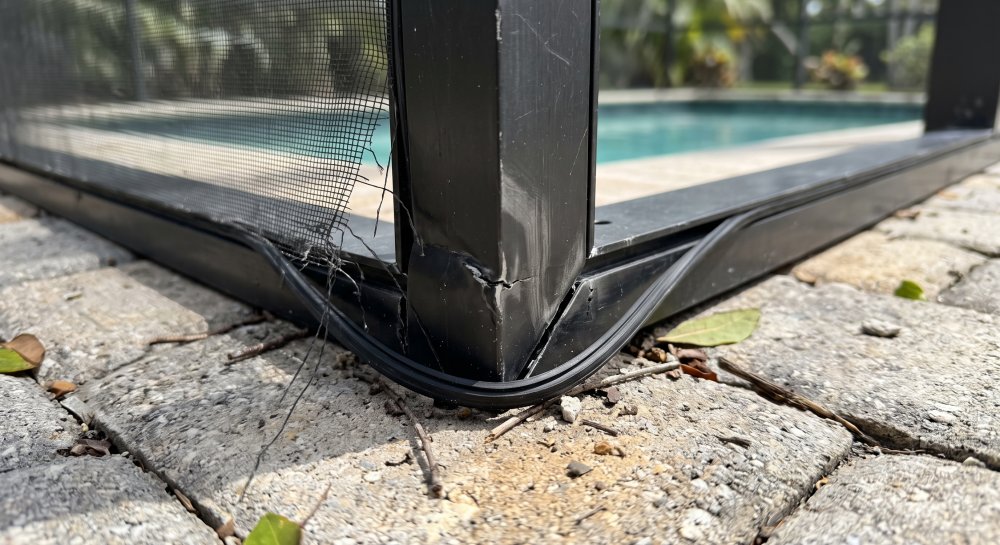
The frame is often covered, the screen often is not
This is the one that catches the most people. A lot of Florida policies cover the aluminum frame and the structure of the cage but exclude the screen mesh itself. So the storm rips every panel out, you file a claim, and you find out the netting isn't part of it. That one stings, because rescreening a whole cage is a real chunk of the job. It's not every policy, but it's common enough that you should assume nothing and check the exact wording. If the screen is excluded on yours, at least you'll know going in that the rescreening portion may be on you.
Hurricane deductibles change the whole math
Here's the part that quietly decides whether a claim is even worth filing. In Florida, hurricane and windstorm claims usually carry a separate deductible, and it's typically a percentage of your dwelling coverage, not a flat number like your everyday deductible. Percentages in the 2 to 10 percent range are common. Run that on a real house and it adds up fast. A 2 percent deductible on a $400,000 home is $8,000 before your carrier pays a dime. If your cage repair comes in under that number, your policy technically covers the damage but you're still paying the whole thing yourself. Understand the deductible first I mean really understand which one applies before you assume a claim is going to help.
What insurance usually won't pay for
A few things tend to fall outside coverage no matter how good your policy is. Flood is its own separate policy, so water that rises up and takes out a cage isn't a homeowners claim. Wear and tear, age, and gradual deterioration are excluded across the board. That matters, because an adjuster can look at a sun-brittled 18-year-old cage and decide the storm just finished off what time already broke. If the cage was never anchored or attached to the house, it may not be covered at all. And a growing number of Florida insurers have started limiting or excluding screen enclosure coverage because of how often these things get wrecked. Some newer policies simply don't include it the way older ones did.
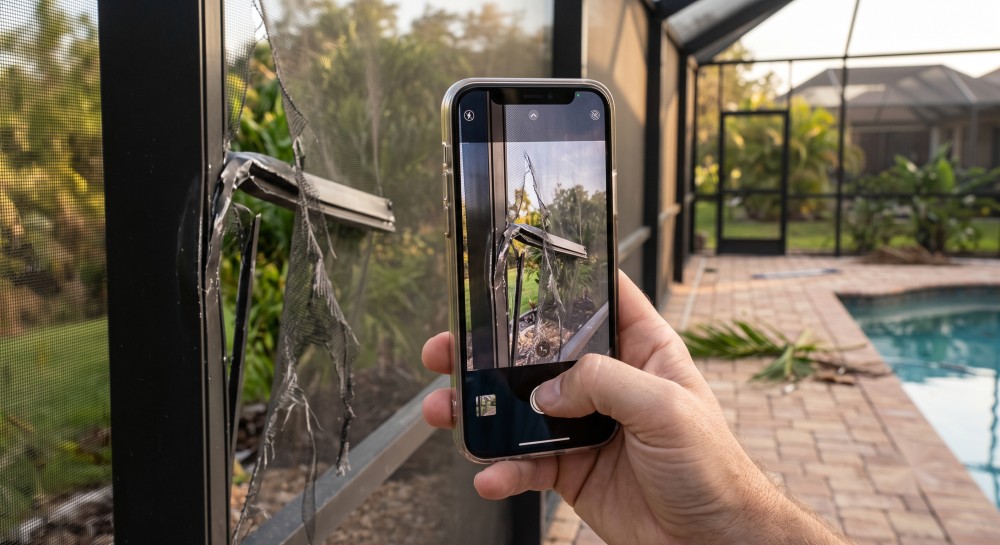
How to give your claim the best shot
If you do file, a little groundwork makes a big difference.
Photograph the damage right away and from a few angles. If you happen to have older photos of the cage in good shape, dig those up too, because showing before and after helps. Don't haul off the debris until your adjuster has seen it or told you it's fine to clear, since that twisted frame on the ground is your evidence. Do a quick temporary fix if there's a safety issue, like a sharp edge or a loose panel that could blow into a neighbor's yard, and keep the receipt. Then get a clear written estimate from a real cage company that itemizes the work, because a vague one-line number is easy for an adjuster to push back on. Also, and this trips people up, most policies want the claim reported reasonably promptly, so don't sit on it for months.
That written estimate is the piece we can help with. When you call us out, we photograph the damage, look at the frame and screen, and hand you an itemized written estimate you can pass straight to your adjuster. We're not public adjusters and we don't negotiate the claim for you, but we make our part of the paperwork clean and easy to submit. See our storm and hurricane damage repair service for how that side works.
Insurance claim or pay cash? How to run the numbers
This is the advice you won't hear from a carrier. If the damage is on the smaller side, a few torn panels or a bent section rather than a flattened cage, price the repair first before you open a claim. If the fix costs less than your hurricane deductible, filing gets you nothing but a claim on your record. In today's Florida market a claims history can follow you when you renew or shop for a new policy. There's no prize for filing. Get a real repair number, compare it to your deductible, and only file when the math actually works in your favor. Our pool cage repair cost guide can give you a ballpark to weigh against your deductible before you decide.
Put plainly, this is a two-column decision and most people only ever look at one column. Paying cash costs you the whole repair now. Filing costs you the deductible, plus whatever a claim does to your renewal, and it only pays anything at all once the damage clears that deductible. Small jobs almost never clear it.
| Situation | Filing a claim | Paying cash |
|---|---|---|
| A few torn panels | Repair is almost certainly under the deductible, so the claim pays nothing | Usually the sensible call |
| A screen door or one bent member | Rarely worth a claim on your record | Usually the sensible call |
| A section down after a storm | Worth pricing properly first, then deciding | Depends how the repair compares with your deductible |
| Whole cage flattened | This is what the policy is for | Rarely realistic on a full rebuild |
| Screen mesh excluded on your policy | Frame may be covered, mesh may not | Expect to fund the rescreen either way |
Get the repair number before you get the claim number. That order matters, because once a claim is opened it is on your record whether or not it ever pays out. If the work turns out to be structural, our guide on who is licensed to work on a Florida screen enclosure is worth reading before you let anyone quote it.
The Sarasota reality right now
Homeowners on the Gulf Coast have watched insurance get tighter and pricier over the last few years, and storms like Ian and Milton are a big reason why. Carriers have pulled back, raised deductibles, and in some cases dropped or capped screen enclosure coverage entirely. What that means for you is simple: don't assume your policy works the way it did five years ago. Pull your declarations page, find your other structures limit and your hurricane deductible, and confirm whether the screen is in or out. Ten minutes now saves you a nasty surprise the week after a storm when everybody's calling their carrier at once. For a neutral read on your rights as a policyholder, the Florida Department of Financial Services publishes consumer guidance on homeowners claims.
We handle the repair side, whatever your policy says
Covered or not, the cage still needs to go back up, and pool cage repair in Sarasota FL is the part we do every day. Maybe you're filing a claim and need a written estimate for the adjuster. Maybe you've decided to pay out of pocket and skip the whole insurance headache. Either way, we'll come out, look it over, and give you an honest written price at no charge. Call (941) 541-6567 or use the form above and we'll call you right back. If the frame is beyond saving, our pool cage rebuild and replacement service covers a full storm rebuild to current code.
Common questions about pool cage insurance
Before you file anything, it helps to understand how wind ratings work on a screen enclosure, because whether a cage met code for its wind zone often shapes how a claim gets handled.
Prevention is cheaper than a claim. If a storm is still out at sea, our pool cage hurricane prep guide walks through what to clear, what to leave alone, and what to do with the pool itself.
Does homeowners insurance cover pool cage damage in Florida?
Usually yes, if the cage is attached to your home and the damage came from a covered peril like wind or a hurricane. Most Florida policies cover a screen enclosure under other structures coverage, but limits, hurricane deductibles, and screen exclusions vary a lot by policy, so you have to read your own declarations page.
Does insurance cover pool screen damage, or just the frame?
Many policies cover the aluminum frame and structure but exclude the screen mesh itself. That surprises a lot of homeowners after a storm, because rescreening can be a big part of the bill. Check the wording on your policy or ask your agent whether screen material is included.
What is the hurricane deductible on a pool cage claim in Florida?
Florida hurricane deductibles are usually a percentage of your dwelling coverage rather than a flat dollar amount, commonly in the 2 to 10 percent range. On a $400,000 home a 2 percent deductible is $8,000, which can be more than a smaller repair costs, so price the repair before you file.
Will insurance pay to rebuild an old pool cage that blew down?
It depends on whether your policy pays replacement cost or actual cash value, and whether the damage is blamed on the storm or on age and wear. Replacement cost pays to rebuild with new materials; actual cash value pays the depreciated value, which on an old cage can be a lot less.
Should I file an insurance claim or pay cash for pool cage repair?
Price the repair first, then compare it with your hurricane deductible. If the repair costs less than the deductible, filing gets you nothing and still puts a claim on your record. If a whole section or the whole cage is down, that is what the policy is for. The dividing line is the deductible, not how annoyed you are about the damage.
Do you help with pool cage insurance claims?
We are a repair contractor, not a public adjuster or attorney, so we do not file or negotiate claims. What we do is photograph the damage and give you a clear itemized written estimate you can hand to your adjuster, which makes your side of the paperwork easier.
Does Citizens or my Florida carrier cover pool cage damage?
It varies by carrier. Citizens and most Florida insurers do offer some screen enclosure coverage, but the limit, the hurricane deductible, and whether the screen mesh is included differ from policy to policy. The only reliable answer is on your own declarations page or from your agent.
Is a pool cage included in hurricane insurance, or is it separate?
For most Florida homeowners the pool cage falls under the other structures part of the same policy, not a separate one. Some carriers add a specific screen enclosure endorsement or rider with its own limit. Storm damage is then subject to your hurricane deductible, which is usually a percentage of your home's value.
This guide is general information, not insurance or legal advice. Coverage depends entirely on your own policy, carrier, and situation. Confirm details with your insurance agent or your policy documents before making a decision.