Quick answer: Standard fiberglass pool cage screen usually lasts about 7 to 15 years in Florida. Sun does most of the aging, salt air near the coast speeds it up, and one bad storm can cut it short. Screen at the doors and kick panels wears out first. When it crackles, sags, or shows daylight at the seams, it's near the end.
Homeowners ask us this when the screen is starting to look tired but hasn't fully failed yet. They want to know if they've got a few more years or if it's about to go. The honest range is 7 to 15 years for standard screen, but where you land in that range depends on a few things. Here's what actually decides it, and how to read your own cage.
The short version: about 7 to 15 years
Standard 18/14 fiberglass screen, the mesh on most Sarasota cages, typically holds up 7 to 15 years before it's brittle enough to replace. A cage in light shade a few miles inland can push toward the long end. A cage in full sun near the water often lands at the short end. The screen is a consumable part. The aluminum frame lasts far longer, so when the screen ages out you're usually looking at a rescreen, not a whole new cage. A single brittle panel is still lanai screen repair in Sarasota FL rather than a full rescreen.
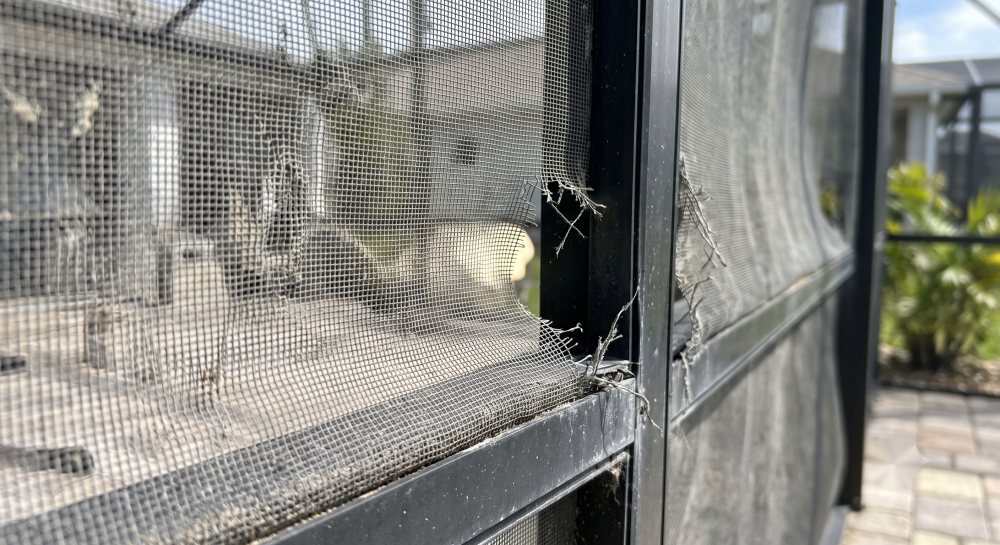
What actually wears the screen out
A few things do the damage, and they stack up:
- Sun. UV is the big one. It slowly makes the fibers brittle until they crack instead of flex. This is the main clock on your screen.
- Salt air. Near the bays, canals, and keys, salt speeds up the aging and eats the fasteners holding the screen in.
- Storms. Wind, flying debris, and branches can tear or blow out panels and end an otherwise fine screen in one afternoon.
- Everyday wear. Doors, pets, kids, and pool gear all rub and poke the lower panels, which is why those go first.
Sun sets the baseline, and everything else moves you earlier. That's why two cages the same age can be in very different shape.
Why screen ages faster near the water in Sarasota
Salt is the difference maker here. The closer you are to the Gulf, the bays, and the canals around Siesta Key, Bird Key, and Casey Key, the harder it is on screen and hardware. Salt doesn't just age the mesh. It corrodes cheap screws and spline until the screen loosens and pulls away from the frame. A cage in Lakewood Ranch, further inland, often gets a couple more years than the same cage would on the water. If you're near the coast, plan for the shorter end of the range.
Does the screen type change how long it lasts?
Somewhat. Standard fiberglass and no-see-um mesh age on a similar timeline, since both are fiberglass at heart and both answer to the same sun. No-see-um just has a tighter weave to stop the tiny biting bugs. Pet-resistant screen is the exception. It's a heavier, tougher weave, and in the high-wear spots like doors and kick panels it clearly outlasts the rest. That's why we often put pet screen down low and standard up high, so you're paying for durability only where it earns its keep. Our guide to the best pool cage screen for Florida breaks down each option. For what it holds up against, screen makers like Phifer publish specs on their fiberglass and pet mesh.
Signs your screen is at the end
You don't need a pro to spot most of these. The screen is near done when:
- It crackles or feels stiff and brittle when you press on it, instead of flexing.
- Panels sag or billow because the screen has stretched and the spline has aged.
- You see daylight, gaps, or bugs getting in at the seams and edges.
- Tears are showing up in more than one spot, not just one unlucky panel.
- The color has faded and the mesh looks chalky or thin.
Here's the part people miss: once one panel goes brittle from age, the rest of the same-age screen is usually close behind. Chasing one torn panel at a time on a 12-year-old cage is a losing game. At that point a full rescreen almost always costs less per panel than piecemeal repairs over the next couple of years. That is also the point where doing the rescreen yourself stops being the cheap option, because brittle mesh tears as you work beside it.
How to make your screen last longer
You can't stop the sun, but you can slow everything else. If you're near the water, rinsing salt off the cage now and then helps the mesh and the hardware. Trim back branches and palm fronds that rub or drop on the panels. Fix small tears and popped spline early, before a little hole spreads across a whole panel. And when you do rescreen, insist on corrosion-resistant fasteners, because the wrong screws will rust, streak the frame, and loosen the new screen inside a couple of seasons. None of this makes screen last forever, but it's the difference between the low end of the range and the high end.
Rescreen the whole cage, or patch it?
If the screen is young and one panel got unlucky, patch it. A single torn panel is a small, cheap fix. If the screen is a decade-plus old and failing in several places, rescreen the whole cage at once so every panel matches and you reset the clock. See our pool cage rescreening service for how that works, and the Sarasota pool cage cost guide for what a full rescreen runs. One more check while you're at it: if the frame itself is bent or corroding at the base, new screen won't fix that, and you may be looking at a rebuild instead. Our rescreen vs rebuild guide walks through how to tell.
Not sure how much life is left? We'll tell you
If your screen is in that in-between stage and you can't tell whether to wait or rescreen, we'll come out and give you a straight read at no charge. Our full repair service in Sarasota checks the screen and the frame, tells you honestly how much life is left, and hand you a written price if it's time. Call (941) 541-6567 or use the form above and we'll call you right back.
Common questions about pool cage screen life
Age matters for more than looks. Brittle screen tears first in a blow, and a flapping panel pulls on the frame far harder than tight screen does. That is why pool cage wind ratings and screen age end up being the same conversation.
How long does pool cage screen last in Florida?
Standard fiberglass pool cage screen usually lasts about 7 to 15 years in Florida. Sun does most of the aging, salt air near the coast speeds it up, and one bad storm can end it early. Screen near doors and kick panels wears out first.
How do I know when my pool cage screen needs replacing?
The screen is near the end when it crackles or feels brittle when you press it, sags out of the frame, shows daylight at the seams, or starts tearing in more than one spot. Once a panel goes brittle, the rest of the same-age screen is usually close behind.
Does no-see-um or pet screen last longer than standard screen?
Pet-resistant screen is heavier and tends to outlast standard fiberglass in high-wear spots like doors and kick panels. No-see-um mesh has a tighter weave for tiny bugs but ages on a similar timeline to standard screen. The same sun and salt affect all of it.
How often should you rescreen a pool cage?
Most Sarasota homeowners rescreen the whole cage once every 7 to 15 years, when the screen has aged out across the enclosure. In between, single torn panels get spot-repaired. If the screen is failing all over, a full rescreen usually costs less per panel than replacing a few at a time.
Can you make pool cage screen last longer?
To a point. Rinsing salt off near the water, trimming branches that rub the panels, and fixing small tears early all help. Corrosion-resistant fasteners keep the frame from streaking and the screen from loosening. Sun aging you can't stop, but you can slow the rest.